
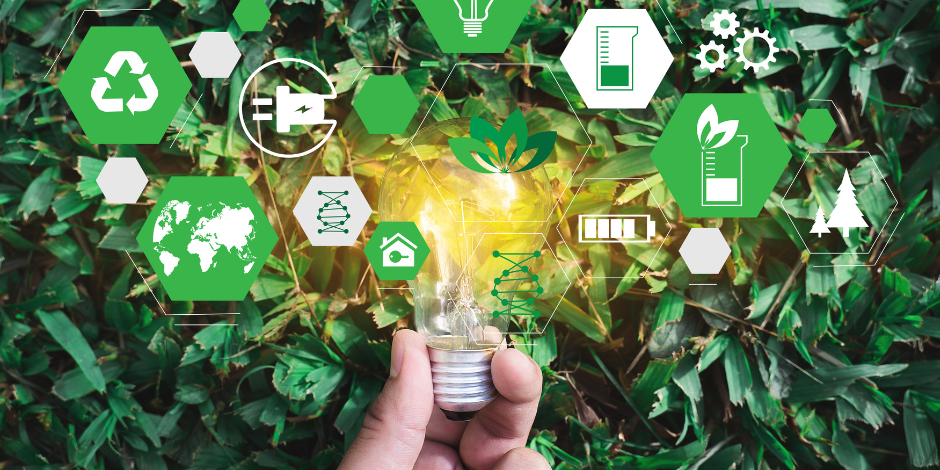
ESG or Environmental, Social and Governance, is a set of standards measuring a business’s impact on society, the environment, and how transparent and accountable it is. According to the CBI, two-thirds of investors take ESG factors into account when investing in a company. This means investing in ESG standards has the potential to grow your business while benefiting the environment and community.
ESG Strategy
An ESG strategy demonstrates that a company is reducing risks which could make the business a good bet for longer-term growth. For example, adapting manufacturing processes to meet future environmental legislation.
With ESG as an important component for business growth it can pay to understand what ESG is, where your business can adopt its principles and approaches, and how it can benefit your organisation.
Environmental
The environmental aspect focuses on how the business minimises its impact on the environment. It covers the business’s products/services, the supply chain and operations. It allows the business to target different areas of its organisation and implement more sustainable, ethical practices.
Examples of environmental business practices include:
- reducing energy and using renewable energy sources to become a net zero organisation
- developing greener products and services
- switching to zero-waste products or sustainable packaging using biodegradable materials
- reducing carbon emissions by changing to LED lighting
- encouraging recycling and reducing the amount of waste destined for landfill.
Social
The social aspect focuses on how a business impacts wider society and workplace culture. Organisations can positively contribute to fairness in society, investing in fair and equal opportunities and conditions for employees, people working in the supply chain, and local communities.
Equality and fairness are at the heart of this aspect and examples of social and ethical business practices include:
- ensuring products are safe and customer data is secure
- preventing abuses within the supply chain, such as labour rights, including modern slavery and freedom of association
- providing training and supporting health and safety, and wellbeing
- promoting equality in the workforce with diversity and inclusivity policies
- investing in local community projects, such as funding educational initiatives.
Governance
Governance refers to the processes of decision-making, reporting, and the logistics of running a business. It also looks at the business’s ethical behaviour and its transparency with stakeholders about its activities. Governance is linked to the environmental and social aspects of ESG in that it looks at the transparency and decision-making behind them.
Examples of governance practices include:
- accurate reporting to stakeholders on financial performance, business strategy and operations
- ensuring business leaders and managers are accountable for risk and performance management
- undertaking business ethically, such as preventing bribery
- ensuring diversity in any leadership team and being open about executive pay.
- Ensuring good governance in your business can appeal to investors and your supply chain and practising good governance may also help enable businesses to grow.
Why companies should embrace ESG
Even if your business isn’t looking for investment, adopting an ESG framework has benefits. From reducing risk to improving reputation and attracting new customers. A big advantage is likely to also be lowering costs. Initiatives that reduce waste and the amount of materials used, such as in packaging, can reduce costs. Reducing energy costs, such as switching to LED lighting, could also lower overheads through smaller energy bills.
Work With CO2 Target
CO2 Target is uniquely equipped to provide you with workable decarbonisation and energy-saving solutions, as part of your ESG strategy.
We can do this whatever your sector, with a rapid payback that will allow you to recover your CapEx and ongoing cost savings every year after that.
Contact CO2 Target to find out more about our energy management and net carbon neutral services and what cost savings we can achieve for your business or organisation.